A tree may need removal if its condition or position cannot be managed appropriately, but a symptom or an inconvenient branch does not establish that on its own. Start by assessing the concern, the options for keeping the tree and any council requirements before deciding on pruning or removal.
If a tree is moving, splitting or has a hanging branch, keep clear of the affected area. For a life-threatening emergency call 000; for storm or flood emergency assistance call the NSW SES on 132 500. Stay away from fallen trees and power lines. NSW SES contact guidance checked on 22 October 2026.
Signs a tree needs assessment
Observe from a safe position on the ground. These concerns help explain the problem to an appropriate professional; they are not a checklist that proves removal is necessary. Our tree removal and tree pruning quotes start with David looking at the tree on site.
| What you have noticed | Why it needs a closer look |
|---|---|
| A new lean, a split or visible root movement | The change may involve the tree’s stability; keep clear rather than testing it yourself |
| Dead or hanging branches after a storm | The affected parts and surrounding area need assessment before work is planned |
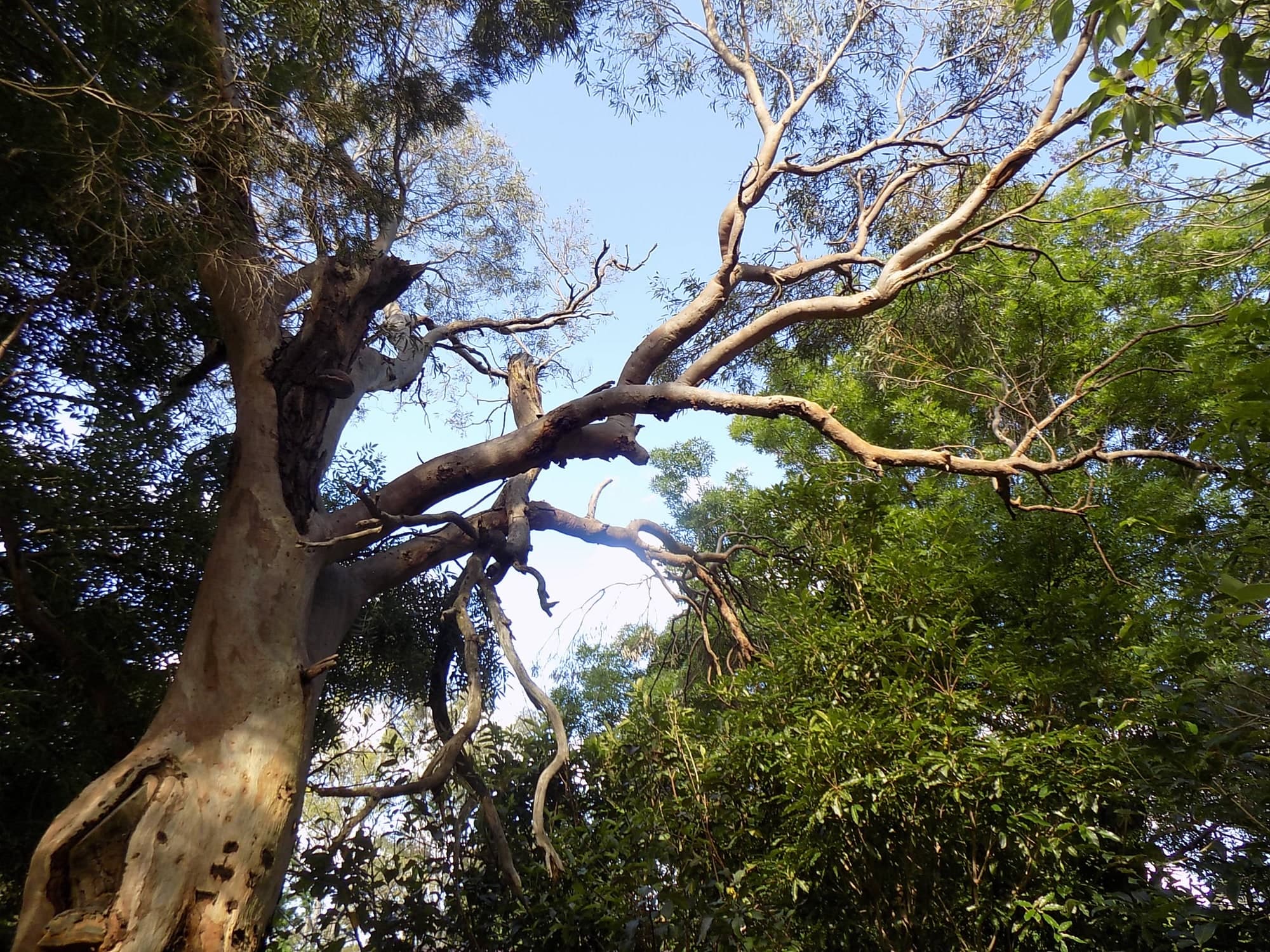
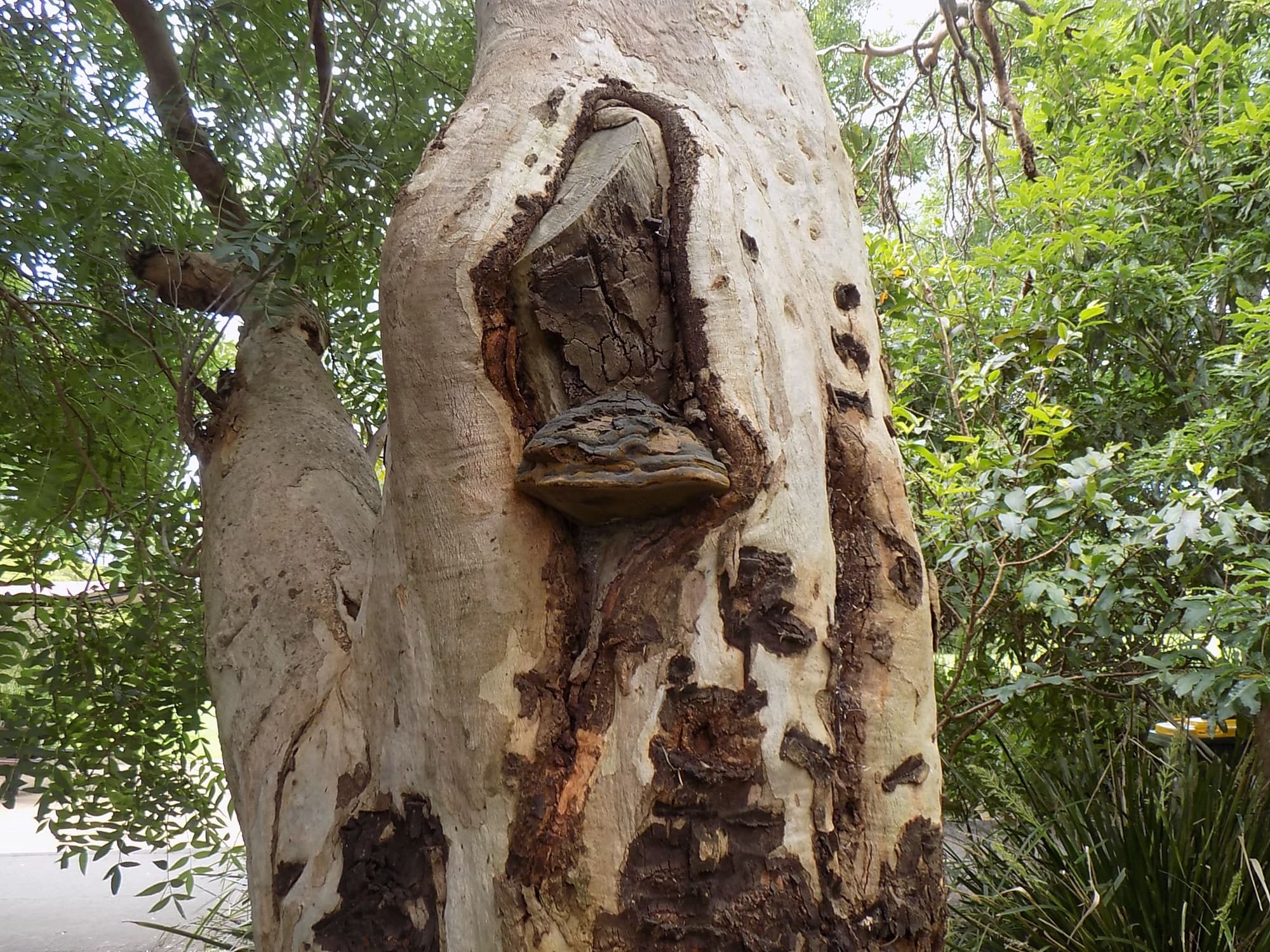
| Decay, cavities or fungal growth | The significance depends on location, extent and the rest of the tree |
| Discolouration, leaf loss or insect damage | Growing conditions, seasonal change, pests or disease may be involved |
| Branches or roots close to structures | Proximity alone does not show the tree caused damage or that removal is the only option |
Avoid excavating roots, pulling at damaged branches or climbing to get a better photograph. Tell David what changed and when, and whether people, access or structures are affected.
Remove or prune? The alternatives
We suggest removal only when it is the right answer. A suitable tree contributes shade, privacy and habitat, so consider what would be lost as well as the problem you want to solve.
- Retain and manage: where appropriate, a consulting arborist may recommend monitoring or changes to how the area around the tree is used.
- Prune selected branches: suitable pruning can address a particular clearance or deadwood issue while keeping the tree. It cannot fix every health or structural problem.
- Seek specialist advice: support systems, root management or treatment may be considered in some cases, but require case-specific advice. They are not services advertised by Absolute.
- Remove and plan the space: where retention is unsuitable and any required approval is in place, removal can be quoted with the desired stump and clean-up outcome.
See our tree pruning service for the work Absolute carries out. If the decision needs a formal assessment, our arborist report referral explains the separate consulting service.
Council rules for tree removal in Sydney
Check the council that governs the property before work starts. Tree size, species, location, heritage protections and other controls can all affect what is required. A dead or storm-damaged tree is not automatically exempt from every requirement; confirm the relevant conditions and documentation.
For example, City of Ryde’s tree application guidance explains its approval process and reasons that do not, by themselves, justify removal. These include improving views or reducing leaf fall. Other councils have their own controls. Source checked on 22 October 2026.
Use the council links on our tree removal page to find the current guidance for your property. Council may require supporting material, a consulting arborist’s report or replacement planting.
A report is an assessment and recommendation, not permission to remove a tree or a guarantee of approval. We refer reports to Aymon at Sydney Arborist Solutions, a separate business. Its report fee is separate from Absolute’s free tree-work quote; see arborist report costs.
How a tree is removed
Once removal is appropriate and any required permission is in place, the work is planned around the tree and its surroundings.
- Agree the scope and accessConfirm the tree, the approved work, access, nearby structures and what should happen to the stump and cut material.
- Set up and remove the treeThe work area is controlled and the removal method suits the site. Where a tree cannot come down in one piece, it may be taken down in sections.
- Complete the agreed finishBranches and debris are dealt with as quoted. Optional stump grinding and preparation for the next use of the space are agreed separately.
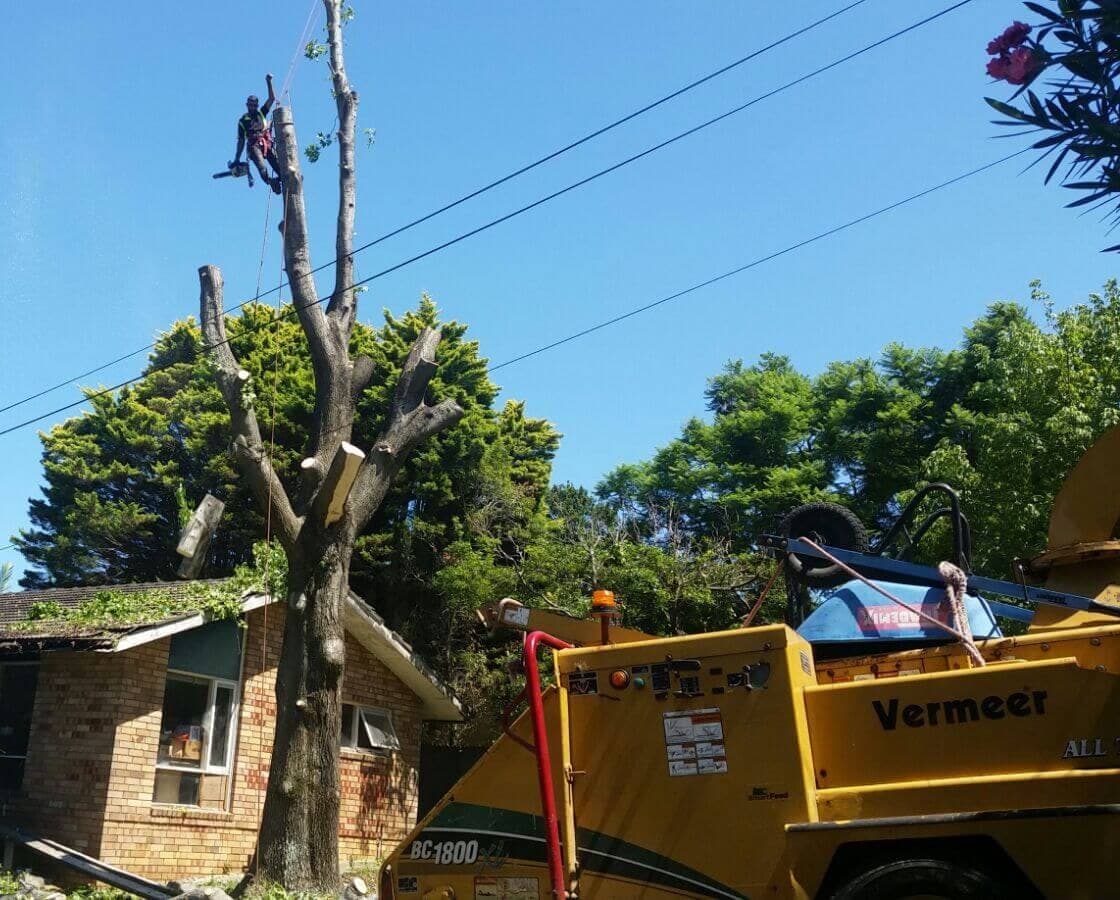
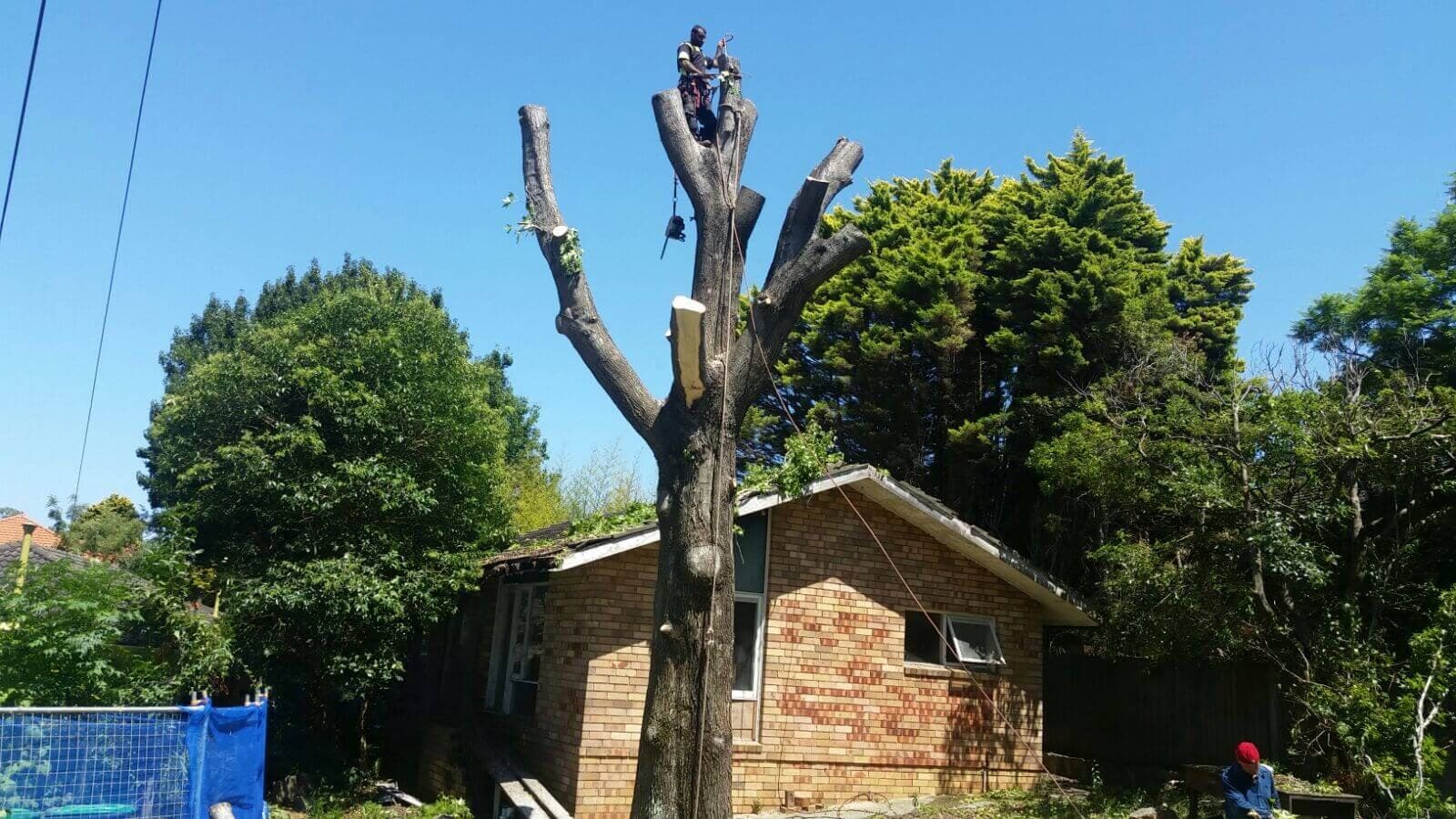
Our Lane Cove job involved a tree beside a house and power lines, taken down in sections with the branches chipped on site. The project photographs show that work; they do not mean every removal needs the same method.
What tree removal typically costs
Size matters, but so do access, surrounding structures, the removal method and waste handling. Stump grinding is optional and quoted separately. Council fees and consulting reports are separate from the physical tree work.
The Sydney 2026 tree removal price guide has our GST-inclusive ranges by tree size and explains what to compare in a quote. If pruning may achieve the result, compare the pruning price guide too. A price comparison follows the decision about suitable work; it should not decide that a sound tree must come out.
After the tree comes out
Agree whether to leave the stump or include grinding. Grinding takes it below the surface; it does not remove the entire root system. Tell David whether you want lawn, a garden bed or a replacement tree so any additional preparation can be discussed.
Replanting depends on the remaining space, roots, soil and council conditions. Our tree-selection guide explains how to choose by mature size, purpose and site conditions. We recommend replanting where there is suitable room.
When to book a removal
Timing depends on condition, approvals, weather and access. Absolute takes storm and fallen-tree jobs, including outside usual hours; availability is confirmed when you call. For urgent assistance, phone rather than relying on a website enquiry. Emergency contacts are listed at the start of this guide.
Choosing who does the work
Check relevant experience, qualifications, suitable insurance, the proposed method and what the quote includes. Ask who is responsible for approval checks and how structures, access and clean-up will be managed. For formal reports, distinguish the consulting arborist from the contractor carrying out tree work.
Absolute has looked after Sydney trees and gardens since 1994 and holds $20 million public liability insurance. You can see our Lane Cove project and the tree removal service before enquiring.
Getting a tree looked at
Tell David your suburb, what concerns you, approximate size, access and any existing report or council decision. Photographs are optional and should be taken from a safe place on the ground. He can discuss suitable pruning or removal and quote the work on site; any required formal assessment and approval come before work starts.
Free on-site quote. Tell David your suburb and what you would like done; photos are optional.