Choose a tree for the space it will occupy when mature, not its size in the nursery pot. Start with the shade, screening or feature you want, then check whether the tree will suit your soil, light and available root space.
Start with the space and purpose
Stand where the tree would go and look up, out and around it. Consider the house, paths, pool, fences, overhead wires and underground services. Include the effect on neighbouring gardens: a tree that fits today can cast a very different shadow as it grows.
Write down what you want it to do. Shade over a sitting area, year-round privacy and a flowering feature are different briefs. Our garden planning service considers planting with the rest of the layout, then we carry out the agreed work. The planning happens on site; it is not a separate drawn-plan service.
Shade, screening or a feature tree?
| Your aim | What to decide before buying |
|---|---|
| Shade where you sit | Where the mature canopy will fall, including whether you still want winter sun |
| Privacy from next door | The height you need, the width available and access to care for the planting |
| A courtyard feature | The eventual canopy and root space, rather than simply choosing the smallest pot |
| Flowers or wildlife interest | A suitable species for the position, with room for its natural form |
Lilly pillies, bottlebrushes, magnolias and crepe myrtles are possible starting points to discuss, not a shortlist that suits every Sydney garden. Ask for the full variety name and its expected mature dimensions. A compact variety and a larger relative can be very different purchases.
City of Sydney’s tree species list helps compare options by site conditions and plant characteristics. It is a research aid, not a guarantee that a tree suits your address. Source checked on 22 October 2026.
Check conditions before planting
Check sun and shade at different times of day, where water sits after rain, the soil and how you will water new planting. Measure the actual planted area, including the space taken by existing roots and structures. A narrow bed beside paving does not offer the same growing space as an open lawn.
Choose for the maintenance you can provide. Fast-growing screening may also mean more future trimming. Evergreen trees still shed leaves, while deciduous trees change the amount of light and privacy through the year.
Before ordering, ask the nursery about plant quality, the variety’s needs and the growing space available. Gardening Australia’s advice on selecting a tree also explains why root condition and a sound structure matter. Source checked on 22 October 2026.
Work with the trees you already have
A suitable existing tree can give the garden shade and structure while new planting establishes. Think about the lawn, paths and garden beds around it before deciding that a fresh layout requires a fresh tree.
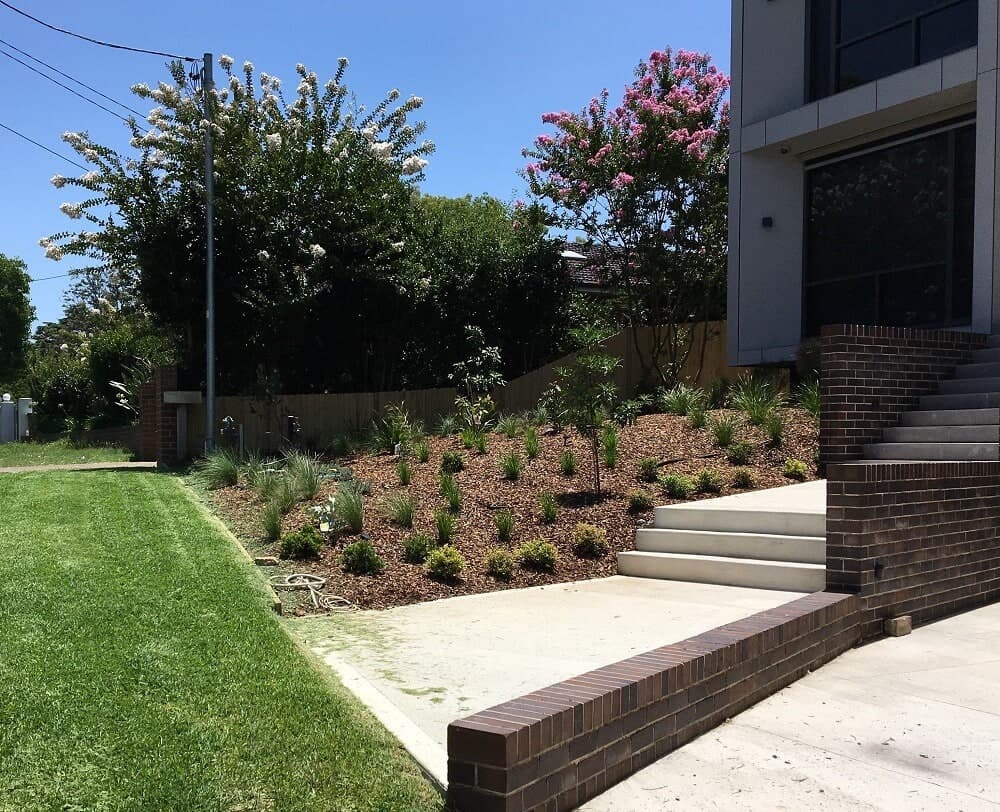
Our Marsfield makeover combined new planting, mulch and lawn with a feature pot and the garden’s established setting. It is an example of considering the whole space rather than choosing plants in isolation.
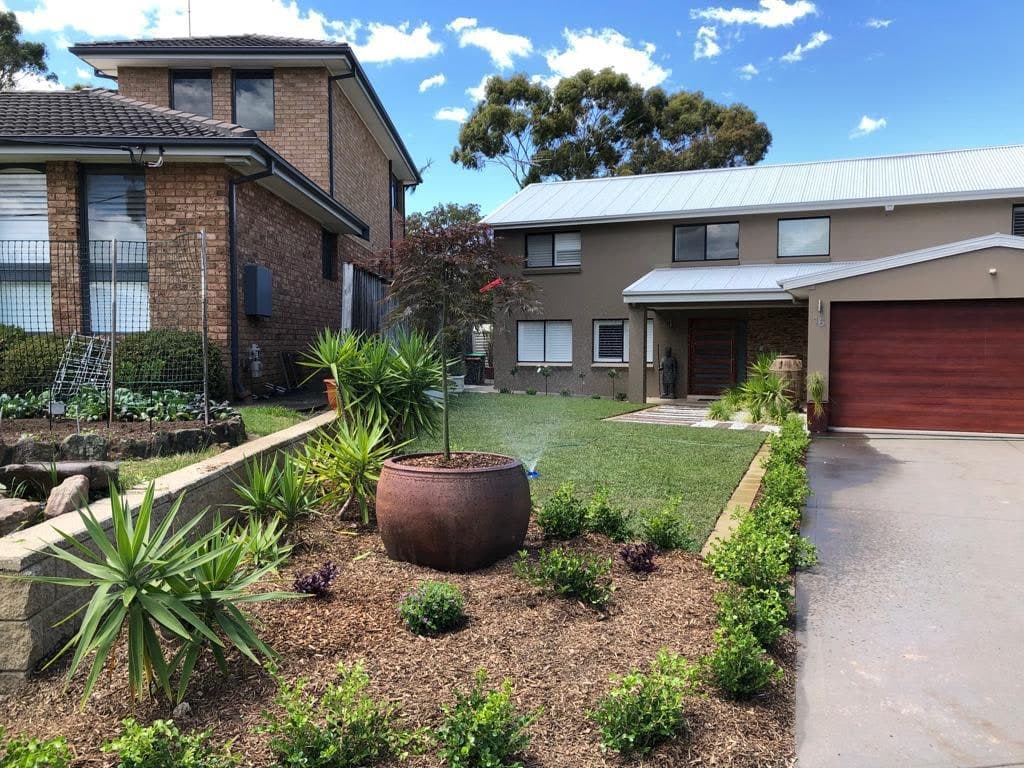
See the Marsfield garden photographs, or the Ryde project for lawn, planted borders and paths planned together.
Replacing an existing tree
Check council requirements before removing a tree to make room for another. Wanting a different species does not establish permission to remove a protected tree. Our tree-removal page links the relevant council guidance.
If you are unsure whether to retain, prune or remove a tree, start with our tree decision guide. A formal assessment, where needed, is separate from planning the new planting.
Budget for planting and establishment
Allow for the plant, preparation, installation and the care needed afterwards. A larger plant affects purchase, delivery and handling costs; check that it can reach the planting spot through gates or side access. Agree who will water it after planting, including when you are away.
For beds and planting together, compare landscaping budgets with garden makeover costs. David can look at your space, discuss suitable planting and quote the agreed work for free on site.
Free on-site quote. Tell David your suburb and what you would like done; photos are optional.