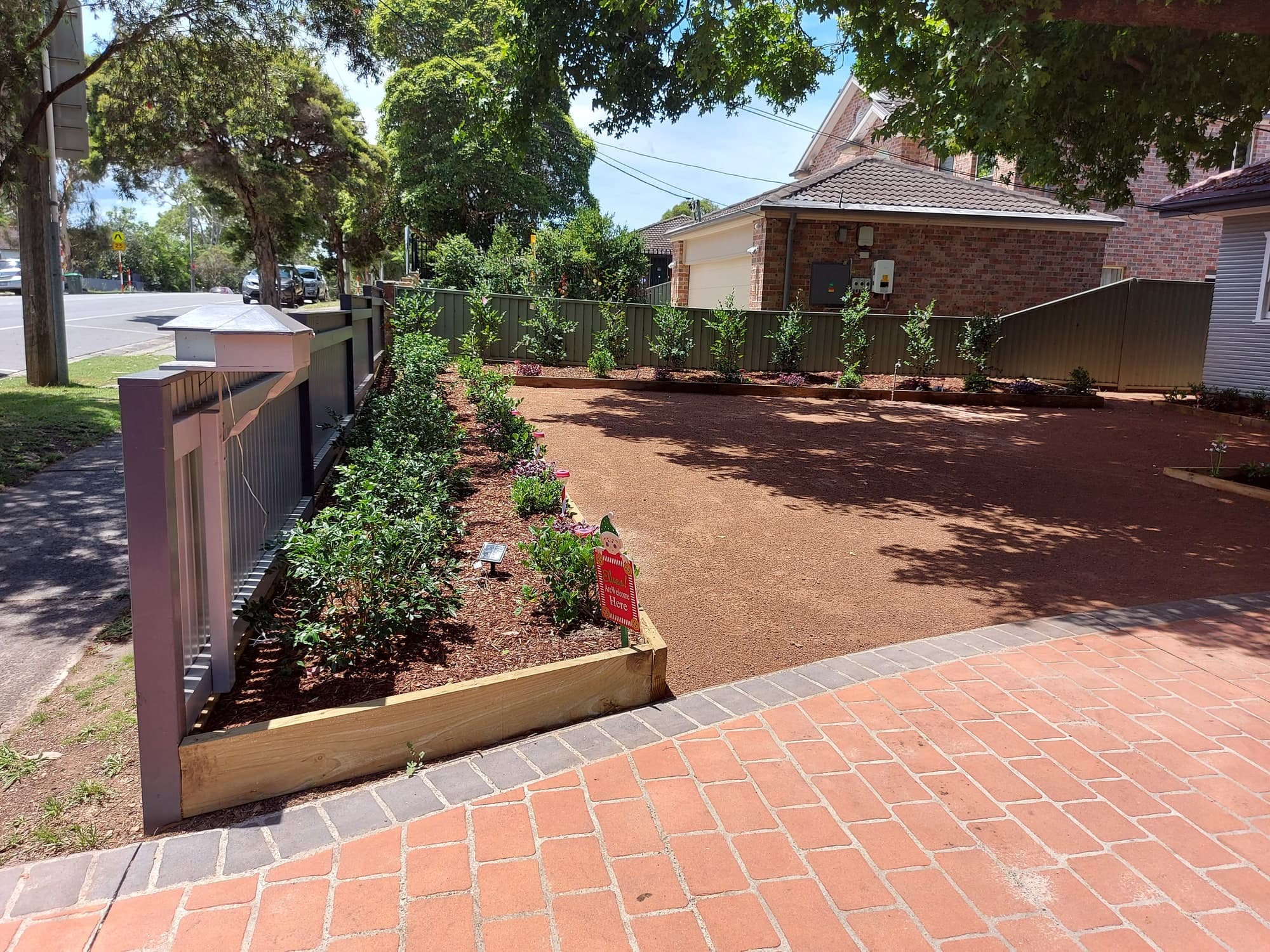

Choose mulch to suit the bed, clear weeds first and check the existing layer before adding more. The right amount depends on the material: a fine mulch and chunky bark should not automatically be spread to the same depth.
What mulch adds to a restored garden
Mulch covers exposed soil, helps conserve moisture and can reduce weed growth. It also gives a planted bed a finished appearance. It will not fix drainage, remove established weeds or replace soil preparation.
During garden restoration work, we look at the bed, the plants you want to keep and the preparation needed before deciding what to spread.
Choosing mulch for the garden
| Material | What to consider |
|---|---|
| Coarse bark or wood chips | A longer-lasting finish for many planted beds; particle size affects the depth needed |
| Finer organic material | Breaks down more readily, but can compact if applied too thickly; check that water reaches the soil |
| Pebbles or stone | A durable decorative finish that does not add organic matter and can absorb heat |
Gardening Australia’s comparison of organic and inorganic mulches explains these differences. A material that suits a path or a heat-tolerant planting may not suit every bed. Source checked on 22 October 2026.
Choose for the plants, watering and the finish you want, not colour alone. Ask where the material comes from and whether it is suitable for the bed, particularly around small plants or food crops.
Prepare before spreading
Clear weeds and identify plants you want to retain. Check whether the soil needs water before covering it, and deal with persistent pooling or other problems rather than hiding them. Finish planting, edging and any agreed soil preparation before the final mulch layer.
Spread evenly and leave space around stems and trunks. Avoid burying low plants, covering drainage points or building the soil and mulch level up against the house.
How deep should mulch be?
Check the material’s instructions and the planting. Queensland Government’s waterwise mulching guidance distinguishes coarse chunks, which need a deeper layer, from fine materials, which are more prone to compaction. It gives more than 5 cm for large chunks such as pine bark and around 2 cm for fine material, with a clear gap around stems. Source checked on 22 October 2026.
Those are material examples, not one depth to use everywhere. When topping up, measure what is already there. You need the missing amount, not a full fresh layer on top of an adequate one.
How much mulch will you need?
Measure the bed area and the additional depth you intend to apply. Convert centimetres to metres before calculating the volume:
Area in m² × depth in metres = volume in m³.
For example, a 20 m² bed receiving a 5 cm layer needs about 1 m³ of mulch: 20 × 0.05 = 1. That is a quantity example, not a recommended depth for every material. Irregular beds, plants and mulch already in place affect the final order.
For a quote, note gate width, steps and how far material must be carried from the delivery point. A small bed with difficult access can take more work than its area suggests.
Mulch as part of a finished garden
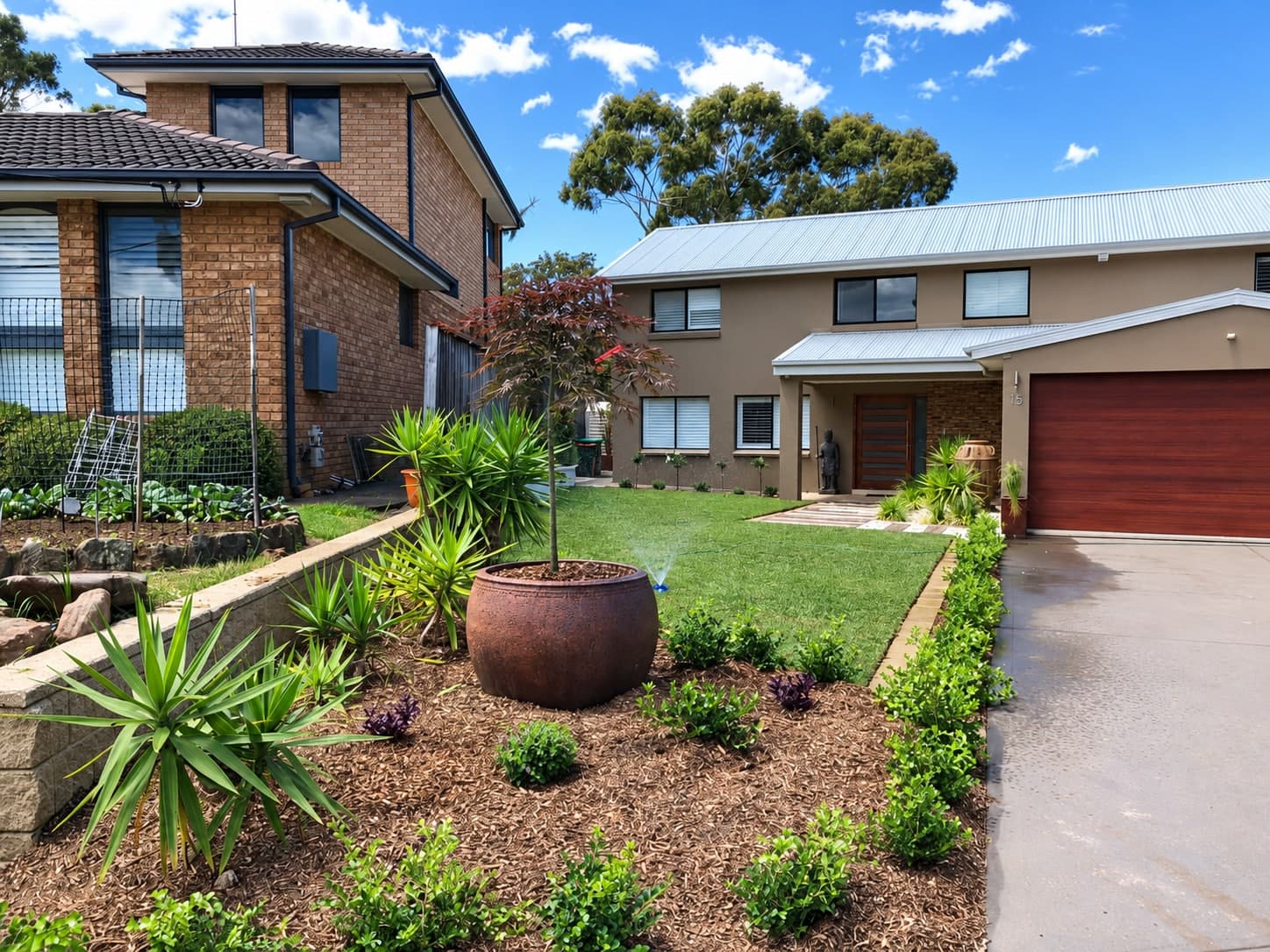
In our Marsfield front garden makeover, fresh mulch sits alongside new planting, a feature pot and a defined lawn edge. The preparation and planting give the mulch a useful setting; it is the finishing layer.
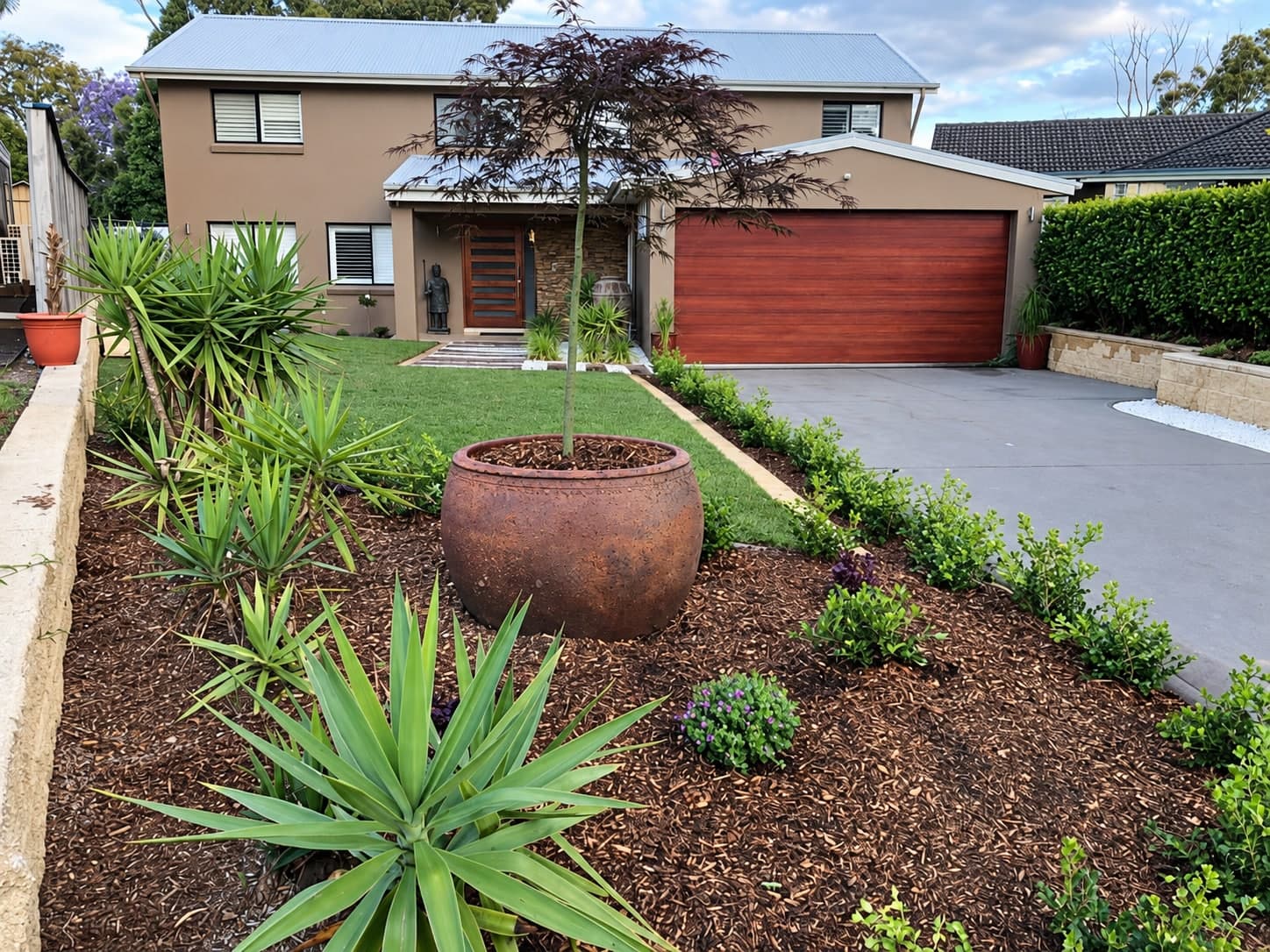
See more of the Marsfield garden. For a different layout, the Gladesville photographs show new planting within a timber raised bed.
What affects the cost?
Area, material, bed preparation, delivery and access determine the work. A materials-only price does not include weeding, carrying or spreading. Ask which of those tasks and any waste removal are included.
See garden restoration costs for weeding, pruning and mulch together, or makeover costs for new beds and planting. David can quote the agreed work after a free visit on site.
Free on-site quote. Tell David your suburb and what you would like done; photos are optional.